April 3rd, 1968

Dr. Martin Luther King, Jr.- I've Been to the Mountaintop

Dr. Martin Luther King, Jr. delivered this speech in support of the striking sanitation workers at Mason Temple in Memphis, TN on April 3, 1968 — the day before he was assassinated

Click here to listen to the speech.

Thank you very kindly, my friends. As I listened to Ralph Abernathy in his eloquent and generous introduction and then thought about myself, I wondered who he was talking about. It’s always good to have your closest friend and associate say something good about you. And Ralph is the best friend that I have in the world.

I’m delighted to see each of you here tonight in spite of a storm warning. You reveal that you are determined to go on anyhow. Something is happening in Memphis, something is happening in our world.

As you know, if I were standing at the beginning of time, with the possibility of general and panoramic view of the whole human history up to now, and the Almighty said to me, “Martin Luther King, which age would you like to live in?” — I would take my mental flight by Egypt through, or rather across the Red Sea, through the wilderness on toward the promised land. And in spite of its magnificence, I wouldn’t stop there. I would move on by Greece, and take my mind to Mount Olympus. And I would see Plato, Aristotle, Socrates, Euripides and Aristophanes assembled around the Parthenon as they discussed the great and eternal issues of reality.

But I wouldn’t stop there. I would go on, even to the great heyday of the Roman Empire. And I would see developments around there, through various emperors and leaders. But I wouldn’t stop there. I would even come up to the day of the Renaissance, and get a quick picture of all that the Renaissance did for the cultural and esthetic life of man. But I wouldn’t stop there. I would even go by the way that the man for whom I’m named had his habitat. And I would watch Martin Luther as he tacked his ninety-five theses on the door at the church in Wittenberg.

But I wouldn’t stop there. I would come on up even to 1863, and watch a vacillating president by the name of Abraham Lincoln finally come to the conclusion that he had to sign the Emancipation Proclamation. But I wouldn’t stop there. I would even come up to the early thirties, and see a man grappling with the problems of the bankruptcy of his nation. And come with an eloquent cry that we have nothing to fear but fear itself.

But I wouldn’t stop there. Strangely enough, I would turn to the Almighty, and say, “If you allow me to live just a few years in the second half of the twentieth century, I will be happy.” Now that’s a strange statement to make, because the world is all messed up. The nation is sick. Trouble is in the land. Confusion all around. That’s a strange statement. But I know, somehow, that only when it is dark enough, can you see the stars. And I see God working in this period of the twentieth century in a away that men, in some strange way, are responding — something is happening in our world. The masses of people are rising up. And wherever they are assembled today, whether they are in Johannesburg, South Africa; Nairobi, Kenya; Accra, Ghana; New York City; Atlanta, Georgia; Jackson, Mississippi; or Memphis, Tennessee — the cry is always the same — “We want to be free.”

And another reason that I’m happy to live in this period is that we have been forced to a point where we’re going to have to grapple with the problems that men have been trying to grapple with through history, but the demand didn’t force them to do it. Survival demands that we grapple with them. Men, for years now, have been talking about war and peace. But now, no longer can they just talk about it. It is no longer a choice between violence and nonviolence in this world; it’s nonviolence or nonexistence.

That is where we are today. And also in the human rights revolution, if something isn’t done, and in a hurry, to bring the colored peoples of the world out of their long years of poverty, their long years of hurt and neglect, the whole world is doomed. Now, I’m just happy that God has allowed me to live in this period, to see what is unfolding. And I’m happy that He’s allowed me to be in Memphis.

I can remember, I can remember when Negroes were just going around as Ralph has said, so often, scratching where they didn’t itch, and laughing when they were not tickled. But that day is all over. We mean business now, and we are determined to gain our rightful place in God’s world.

And that’s all this whole thing is about. We aren’t engaged in any negative protest and in any negative arguments with anybody. We are saying that we are determined to be men. We are determined to be people. We are saying that we are God’s children. And that we don’t have to live like we are forced to live.

Now, what does all of this mean in this great period of history? It means that we’ve got to stay together. We’ve got to stay together and maintain unity. You know, whenever Pharaoh wanted to prolong the period of slavery in Egypt, he had a favorite, favorite formula for doing it. What was that? He kept the salves fighting among themselves. But whenever the slaves get together, something happens in Pharaoh’s court, and he cannot hold the slaves in slavery. When the slaves get together, that’s the beginning of getting out of slavery. Now let us maintain unity.

Secondly, let us keep the issues where they are. The issue is injustice. The issue is the refusal of Memphis to be fair and honest in its dealings with its public servants, who happen to be sanitation workers. Now, we’ve got to keep attention on that. That’s always the problem with a little violence. You know what happened the other day, and the press dealt only with the window-breaking. I read the articles. They very seldom got around to mentioning the fact that one thousand, three hundred sanitation workers were on strike, and that Memphis is not being fair to them, and that Mayor Loeb is in dire need of a doctor. They didn’t get around to that.

Now we’re going to march again, and we’ve got to march again, in order to put the issue where it is supposed to be. And force everybody to see that there are thirteen hundred of God’s children here suffering, sometimes going hungry, going through dark and dreary nights wondering how this thing is going to come out. That’s the issue. And we’ve got to say to the nation: we know it’s coming out. For when people get caught up with that which is right and they are willing to sacrifice for it, there is no stopping point short of victory.

We aren’t going to let any mace stop us. We are masters in our nonviolent movement in disarming police forces; they don’t know what to do, I’ve seen them so often. I remember in Birmingham, Alabama, when we were in that majestic struggle there we would move out of the 16th Street Baptist Church day after day; by the hundreds we would move out. And Bull Connor would tell them to send the dogs forth and they did come; but we just went before the dogs singing, “Ain’t gonna let nobody turn me round.” Bull Connor next would say, “Turn the fire hoses on.” And as I said to you the other night, Bull Connor didn’t know history. He knew a kind of physics that somehow didn’t relate to the transphysics that we knew about. And that was the fact that there was a certain kind of fire that no water could put out. And we went before the fire hoses; we had known water. If we were Baptist or some other denomination, we had been immersed. If we were Methodist, and some others, we had been sprinkled, but we knew water.

That couldn’t stop us. And we just went on before the dogs and we would look at them; and we’d go on before the water hoses and we would look at it, and we’d just go on singing “Over my head I see freedom in the air.” And then we would be thrown in the paddy wagons, and sometimes we were stacked in there like sardines in a can. And they would throw us in, and old Bull would say, “Take them off,” and they did; and we would just go in the paddy wagon singing, “We Shall Overcome.” And every now and then we’d get in the jail, and we’d see the jailers looking through the windows being moved by our prayers, and being moved by our words and our songs. And there was a power there which Bull Connor couldn’t adjust to; and so we ended up transforming Bull into a steer, and we won our struggle in Birmingham.

Now we’ve got to go on to Memphis just like that. I call upon you to be with us Monday. Now about injunctions: We have an injunction and we’re going into court tomorrow morning to fight this illegal, unconstitutional injunction. All we say to America is, “Be true to what you said on paper.” If I lived in China or even Russia, or any totalitarian country, maybe I could understand the denial of certain basic First Amendment privileges, because they hadn’t committed themselves to that over there. But somewhere I read of the freedom of assembly. Somewhere I read of the freedom of speech. Somewhere I read of the freedom of the press. Somewhere I read that the greatness of America is the right to protest for right. And so just as I say, we aren’t going to let any injunction turn us around. We are going on.

We need all of you. And you know what’s beautiful to me, is to see all of these ministers of the Gospel. It’s a marvelous picture. Who is it that is supposed to articulate the longings and aspirations of the people more than the preacher? Somehow the preacher must be an Amos, and say, “Let justice roll down like waters and righteousness like a mighty stream.” Somehow, the preacher must say with Jesus, “The spirit of the Lord is upon me, because he hath anointed me to deal with the problems of the poor.”

And I want to commend the preachers, under the leadership of these noble men: James Lawson, one who has been in this struggle for many years; he’s been to jail for struggling; but he’s still going on, fighting for the rights of his people. Rev. Ralph Jackson, Billy Kiles; I could just go right on down the list, but time will not permit. But I want to thank them all. And I want you to thank them, because so often, preachers aren’t concerned about anything but themselves. And I’m always happy to see a relevant ministry.

It’s all right to talk about “long white robes over yonder,” in all of its symbolism. But ultimately people want some suits and dresses and shoes to wear down here. It’s all right to talk about “streets flowing with milk and honey,” but God has commanded us to be concerned about the slums down here, and his children who can’t eat three square meals a day. It’s all right to talk about the new Jerusalem, but one day, God’s preachers must talk about the New York, the new Atlanta, the new Philadelphia, the new Los Angeles, the new Memphis, Tennessee. This is what we have to do.

Now the other thing we’ll have to do is this: Always anchor our external direct action with the power of economic withdrawal. Now, we are poor people, individually, we are poor when you compare us with white society in America. We are poor. Never stop and forget that collectively, that means all of us together, collectively we are richer than all the nations in the world, with the exception of nine. Did you ever think about that? After you leave the United States, Soviet Russia, Great Britain, West Germany, France, and I could name the others, the Negro collectively is richer than most nations of the world. We have an annual income of more than thirty billion dollars a year, which is more than all of the exports of the United States, and more than the national budget of Canada. Did you know that? That’s power right there, if we know how to pool it.

We don’t have to argue with anybody. We don’t have to curse and go around acting bad with our words. We don’t need any bricks and bottles, we don’t need any Molotov cocktails, we just need to go around to these stores, and to these massive industries in our country, and say, “God sent us by here, to say to you that you’re not treating his children right. And we’ve come by here to ask you to make the first item on your agenda fair treatment, where God’s children are concerned. Now, if you are not prepared to do that, we do have an agenda that we must follow. And our agenda calls for withdrawing economic support from you.”

And so, as a result of this, we are asking you tonight, to go out and tell your neighbors not to buy Coca-Cola in Memphis. Go by and tell them not to buy Sealtest milk. Tell them not to buy — what is the other bread? — Wonder Bread. And what is the other bread company, Jesse? Tell them not to buy Hart’s bread. As Jesse Jackson has said, up to now, only the garbage men have been feeling pain; now we must kind of redistribute the pain. We are choosing these companies because they haven’t been fair in their hiring policies; and we are choosing them because they can begin the process of saying, they are going to support the needs and the rights of these men who are on strike. And then they can move on downtown and tell Mayor Loeb to do what is right.

But not only that, we’ve got to strengthen black institutions. I call upon you to take your money out of the banks downtown and deposit your money in Tri-State Bank — we want a “bank-in” movement in Memphis. So go by the savings and loan association. I’m not asking you something we don’t do ourselves at SCLC. Judge Hooks and others will tell you that we have an account here in the savings and loan association from the Southern Christian Leadership Conference. We’re just telling you to follow what we’re doing. Put your money there. You have six or seven black insurance companies in Memphis. Take out your insurance there. We want to have an “insurance-in.”

Now these are some practical things we can do. We begin the process of building a greater economic base. And at the same time, we are putting pressure where it really hurts. I ask you to follow through here.

Now, let me say as I move to my conclusion that we’ve got to give ourselves to this struggle until the end. Nothing would be more tragic than to stop at this point, in Memphis. We’ve got to see it through. And when we have our march, you need to be there. Be concerned about your brother. You may not be on strike. But either we go up together, or we go down together.

Let us develop a kind of dangerous unselfishness. One day a man came to Jesus; and he wanted to raise some questions about some vital matters in life. At points, he wanted to trick Jesus, and show him that he knew a little more than Jesus knew, and through this, throw him off base. Now that question could have easily ended up in a philosophical and theological debate. But Jesus immediately pulled that question from mid-air, and placed it on a dangerous curve between Jerusalem and Jericho. And he talked about a certain man, who fell among thieves. You remember that a Levite and a priest passed by on the other side. They didn’t stop to help him. And finally a man of another race came by. He got down from his beast, decided not to be compassionate by proxy. But with him, administering first aid, and helped the man in need. Jesus ended up saying, this was the good man, this was the great man, because he had the capacity to project the “I” into the “thou,” and to be concerned about his brother. Now you know, we use our imagination a great deal to try to determine why the priest and the Levite didn’t stop. At times we say they were busy going to church meetings — an ecclesiastical gathering — and they had to get on down to Jerusalem so they wouldn’t be late for their meeting. At other times we would speculate that there was a religious law that “One who was engaged in religious ceremonials was not to touch a human body twenty-four hours before the ceremony.” And every now and then we begin to wonder whether maybe they were not going down to Jerusalem, or down to Jericho, rather to organize a “Jericho Road Improvement Association.” That’s a possibility. Maybe they felt that it was better to deal with the problem from the causal root, rather than to get bogged down with an individual effort.

But I’m going to tell you what my imagination tells me. It’s possible that these men were afraid. You see, the Jericho road is a dangerous road. I remember when Mrs. King and I were first in Jerusalem. We rented a car and drove from Jerusalem down to Jericho. And as soon as we got on that road, I said to my wife, “I can see why Jesus used this as a setting for his parable.” It’s a winding, meandering road. It’s really conducive for ambushing. You start out in Jerusalem, which is about 1200 miles, or rather 1200 feet above sea level. And by the time you get down to Jericho, fifteen or twenty minutes later, you’re about 2200 feet below sea level. That’s a dangerous road. In the days of Jesus it came to be known as the “Bloody Pass.” And you know, it’s possible that the priest and the Levite looked over that man on the ground and wondered if the robbers were still around. Or it’s possible that they felt that the man on the ground was merely faking. And he was acting like he had been robbed and hurt, in order to seize them over there, lure them there for quick and easy seizure. And so the first question that the Levite asked was, “If I stop to help this man, what will happen to me?” But then the Good Samaritan came by. And he reversed the question: “If I do not stop to help this man, what will happen to him?”

That’s the question before you tonight. Not, “If I stop to help the sanitation workers, what will happen to all of the hours that I usually spend in my office every day and every week as a pastor?” The question is not, “If I stop to help this man in need, what will happen to me?” “If I do not stop to help the sanitation workers, what will happen to them?” That’s the question.

Let us rise up tonight with a greater readiness. Let us stand with a greater determination. And let us move on in these powerful days, these days of challenge to make America what it ought to be. We have an opportunity to make America a better nation. And I want to thank God, once more, for allowing me to be here with you.

You know, several years ago, I was in New York City autographing the first book that I had written. And while sitting there autographing books, a demented black woman came up. The only question I heard from her was, “Are you Martin Luther King?”

And I was looking down writing, and I said yes. And the next minute I felt something beating on my chest. Before I knew it I had been stabbed by this demented woman. I was rushed to Harlem Hospital. It was a dark Saturday afternoon. And that blade had gone through, and the X-rays revealed that the tip of the blade was on the edge of my aorta, the main artery. And once that’s punctured, you drown in your own blood — that’s the end of you.

It came out in the New York Times the next morning, that if I had sneezed, I would have died. Well, about four days later, they allowed me, after the operation, after my chest had been opened, and the blade had been taken out, to move around in the wheel chair in the hospital. They allowed me to read some of the mail that came in, and from all over the states, and the world, kind letters came in. I read a few, but one of them I will never forget. I had received one from the President and the Vice-President. I’ve forgotten what those telegrams said. I’d received a visit and a letter from the Governor of New York, but I’ve forgotten what the letter said. But there was another letter that came from a little girl, a young girl who was a student at the White Plains High School. And I looked at that letter, and I’ll never forget it. It said simply, “Dear Dr. King: I am a ninth-grade student at the White Plains High School.” She said, “While it should not matter, I would like to mention that I am a white girl. I read in the paper of your misfortune, and of your suffering. And I read that if you had sneezed, you would have died. And I’m simply writing you to say that I’m so happy that you didn’t sneeze.”

And I want to say tonight, I want to say that I am happy that I didn’t sneeze. Because if I had sneezed, I wouldn’t have been around here in 1960, when students all over the South started sitting-in at lunch counters. And I knew that as they were sitting in, they were really standing up for the best in the American dream. And taking the whole nation back to those great wells of democracy which were dug deep by the Founding Fathers in the Declaration of Independence and the Constitution. If I had sneezed, I wouldn’t have been around in 1962, when Negroes in Albany, Georgia, decided to straighten their backs up. And whenever men and women straighten their backs up, they are going somewhere, because a man can’t ride your back unless it is bent. If I had sneezed, I wouldn’t have been here in 1963, when the black people of Birmingham, Alabama, aroused the conscience of this nation, and brought into being the Civil Rights Bill. If I had sneezed, I wouldn’t have had a chance later that year, in August, to try to tell America about a dream that I had had. If I had sneezed, I wouldn’t have been down in Selma, Alabama, been in Memphis to see the community rally around those brothers and sisters who are suffering. I’m so happy that I didn’t sneeze.

And they were telling me, now it doesn’t matter now. It really doesn’t matter what happens now. I left Atlanta this morning, and as we got started on the plane, there were six of us, the pilot said over the public address system, “We are sorry for the delay, but we have Dr. Martin Luther King on the plane. And to be sure that all of the bags were checked, and to be sure that nothing would be wrong with the plane, we had to check out everything carefully. And we’ve had the plane protected and guarded all night.”

And then I got to Memphis. And some began to say the threats, or talk about the threats that were out. What would happen to me from some of our sick white brothers?

Well, I don’t know what will happen now. We’ve got some difficult days ahead. But it doesn’t matter with me now. Because I’ve been to the mountaintop. And I don’t mind. Like anybody, I would like to live a long life. Longevity has its place. But I’m not concerned about that now. I just want to do God’s will. And He’s allowed me to go up to the mountain. And I’ve looked over. And I’ve seen the promised land. I may not get there with you. But I want you to know tonight, that we, as a people, will get to the promised land. And I’m happy, tonight. I’m not worried about anything. I’m not fearing any man. Mine eyes have seen the glory of the coming of the Lord.

Return From The Twilight Zone

Serling  

“I think it is criminal that we ( writers ) are not permitted to make dramatic note of social evils that exist, of controversial themes as they are inherent in our society.”

Rod Serling

Last year I was faced with a decision- post a Press Release on my blog about I.C.E. Agents making an appearance in Lynnwood, Washington or use the Press Release as the basis for a story.
I learned how to write like that from Rod Serling.

I caught on to the fact that as a writer you could be as Political as the day is long and not cause too grief to yourself and others – providing  of course the ideas you were expressing were wrapped in a black cape and had fangs. However, being that my husband and I are both Political Activists guess which route I took?

It’s a cliche’ but sometimes you do have to decided which hill to die on.

Only right in the middle of drafting a Vampire Story based on the press  release I wondered what would Rod Serling say about my decision and I thought he’d say: “Hell Anita, this is 2007, what are you doing? We had something called the Civil Rights Movement–  and the Women’s Liberation movement…a lot of people walked a very long way to change our our world. “

So I slammed on my breaks, took a sharp turn and  ” Started my way down an unmarked road- the kind of road  that can only be found in…

The Twilight Zone.”

Since then my blogs- one of which is full of my own ” Twilight Zone ” type stories and other which was at the time a daily journal that was NOT political  has been visited by Homeland Security, The Pentagon and other Government agencies.

 These agencies have gone over stories I’ve written about Vampires, Werewolves, cursed towns and people getting buried alive-  (for some strange reason the Pentagon seemed fond of  visiting a Halloween Greeting I did for my readers with the quote:  “From ghoulies and ghosties and long leggety beasties and things that go bump in the night, Good Lord, deliver us!” )

Along with my new Official Type Readers ( who could spend anywhere from 5 minutes to a half hour on one site ) I received e-mails from an employee of a local law enforcement agency calling me a fascist for not running his comments and fake name ( which was misspelled ) on one of the posts and argued his point to be read on my blog by REMINDING me that  ” We ( the police) allow people we arrest to make a statement that is contrary to our reports” (emphasis and underline by a.m.m)

  What I realized after I received the second e-mail  was that my life would not have become somewhat more complicated had I simply taken the I.C.E. Agents and the entire Anti-Mexican issue to the Twilight Zone where I could have turned the entire  rotten lot of haters into Monster Hunters and then bumped them all off  and then immediately had LOTS AND LOTS readers saying, ” Hurray!” ( it’s all about the under dog nowadays…in case you haven’t noticed, that’s a Twilight Zone thing )

After all that’s what Rod Serling did- some of his stories were designed to survive in a ‘ hostile enviorment’- stories like the one Rod Serling wrote about Emmet Till:

 Historians view Till’s case as one of the catalysts of the civil rights movement. Till was a black 14-year-old from Chicago who whistled at a white woman while visiting relatives in Mississippi. The two men accused of kidnapping and brutally murdering Till were acquitted, though they later admitted to the crime… ( AP)

 This is the deal: the two versions Rod Serling wrote about Emmet Till (so that Emmet’s story could at least see the light of day), never made Rod Serling or anybody else very happy. 

Sitting through  those two versions  is like listening to a guitar that’s being played slightly out of tune.

 That’s why I posted  the notices for open public meetings about immigration, the press releases about the I.C.E Agents, and my opinions to what was becoming a despicable situation created by ignorance and intolerance as they stood on my blog.

That was the story and  there was no other way to tell it.

So was it worth it?

I guess that  having a Law Enforcement person screeching at my husband in a public meeting about immigration- where there are armed enforcement people standing all around the room- that my blogs are somehow causing her and her agency some sort of grief is- in it’s own way- a reward.

That’s why on so many levels- from mine as a Writer, a Human Rights Activist, and as a Political Activist – I’m glad that the story whose message about race and prejudice resurfaced now- and that it  has returned from it’s long trip through the Twilight Zone when it did.

It’s time.

amm

Submitted For Your Approval, Finally. 

ITHACA, New York (AP)

Serling 

More than a half-century after it was twice censored by network television, Rod Serling’s story on the 1955 lynching of Emmett Till and his message about prejudice will finally be told the way Serling wanted.

The original stage script of Serling’s “Noon on Doomsday” will be read Saturday at Ithaca College during a conference on Serling’s life and legacy. The award-winning writer-creator of “The Twilight Zone” taught at Ithaca from 1967 until 1975, when he died.

“Serling seemed to struggle with network and sponsor censorship all his career but I believe his trying to tell the story of the Emmett Till case was the pinnacle of this battle,” said Andrew Polak, the board president of the Rod Serling Memorial Foundation, a Binghamton-based nonprofit group that works to further Serling’s legacy. “This will be the first time the story will be told as Rod intended.”

Historians view Till’s case as one of the catalysts of the civil rights movement. Till was a black 14-year-old from Chicago who whistled at a white woman while visiting relatives in Mississippi. The two men accused of kidnapping and brutally murdering Till were acquitted, though they later admitted to the crime.

Serling tried twice to dramatize Till’s murder and the acquittal of his killers. In both cases, the writer met with sponsor censorship and network interference that diluted his final work, said researchers Tony Albarella and Amy E. Boyle Johnston.

“Serling was one of the first people to write about current events. He was taking a major front-page issue and showing the universal appeal of it and showing our own implications. Today that’s a dime a dozen. But when Serling was doing it, that was shocking,” said Johnston, who’s working on a biography of Serling to be published in 2009.

By the time Till was lynched, Serling was one of the most celebrated writers of TV’s Golden Age and already had written several socially conscious scripts, including “Patterns” (about corporate corruption) and “Requiem for a Heavyweight.” Serling’s Till story was initially accepted and approved by the producers of ABC’s “The United States Steel Hour,” for which he’d already written several well-received scripts.

But when it was reported that Serling was writing about the Till case, thousands of protests poured in, mostly from members of the White Citizens Council, a Southern white supremacist organization, said Johnston.

Serling produced three “Doomsday” scripts. The first two were for the stage, said Johnston. In the original, the victim was a college-aged black man. Serling’s language and descriptions also were more coarse and idiomatic in the original version, she said.

When it ran on television in April 1956, “Noon on Doomsday” was so watered down as to be meaningless, Johnston said.

The location was changed to New England. The murdered person was transformed into an unnamed foreigner. The word “lynch” was excised from the script, as was anything deemed “too Southern” in connotation. The villain was softened to “just a good decent, American boy momentarily gone wrong,” Johnston said.

Two years later, Serling tried again to examine the extreme consequences of prejudice enmeshed in Till’s saga. His new effort was titled “A Town Has Turned to Dust,” and he offered it to CBS for “Playhouse 90.”

But CBS executives again eviscerated the script — changing the central character to a Mexican boy who falls in love from afar with a white shopkeeper’s wife, said Albarella, who’s working on the sixth book of a 10-book series about “The Twilight Zone” called “As Timeless As Infinity.”

Although it received critical acclaim, a dismayed Serling later said, “By the time ‘A Town Has Turned to Dust’ went before the cameras, my script had turned to dust.”

But those experiences, said Polak, help lead Serling to another place — where he was free to explore the darkened human heart by use of allegory and within the context of fantasy: “The Twilight Zone.”

A More Perfect Union

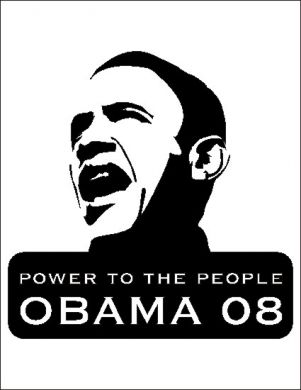
Barack Obama Speech

As Prepared for Delivery…

Philadelphia 

3-18-08 

“We the people, in order to form a more perfect union.” 

Two hundred and twenty one years ago, in a hall that still stands across the street, a group of men gathered and, with these simple words, launched America’s improbable experiment in democracy.  Farmers and scholars; statesmen and patriots who had traveled across an ocean to escape tyranny and persecution finally made real their declaration of independence at a Philadelphia convention that lasted through the spring of 1787. 

The document they produced was eventually signed but ultimately unfinished.  It was stained by this nation’s original sin of slavery, a question that divided the colonies and brought the convention to a stalemate until the founders chose to allow the slave trade to continue for at least twenty more years, and to leave any final resolution to future generations. 

Of course, the answer to the slavery question was already embedded within our Constitution – a Constitution that had at is very core the ideal of equal citizenship under the law; a Constitution that promised its people liberty, and justice, and a union that could be and should be perfected over time. 

And yet words on a parchment would not be enough to deliver slaves from bondage, or provide men and women of every color and creed their full rights and obligations as citizens of the United States.  What would be needed were Americans in successive generations who were willing to do their part – through protests and struggle, on the streets and in the courts, through a civil war and civil disobedience and always at great risk – to narrow that gap between the promise of our ideals and the reality of their time.

This was one of the tasks we set forth at the beginning of this campaign – to continue the long march of those who came before us, a march for a more just, more equal, more free, more caring and more prosperous America.  I chose to run for the presidency at this moment in history because I believe deeply that we cannot solve the challenges of our time unless we solve them together – unless we perfect our union by understanding that we may have different stories, but we hold common hopes; that we may not look the same and we may not have come from the same place, but we all want to move in the same direction – towards a better future for of children and our grandchildren.   

This belief comes from my unyielding faith in the decency and generosity of the American people.  But it also comes from my own American story. 

I am the son of a black man from Kenya and a white woman from Kansas.  I was raised with the help of a white grandfather who survived a Depression to serve in Patton’s Army during World War II and a white grandmother who worked on a bomber assembly line at Fort Leavenworth while he was overseas.  I’ve gone to some of the best schools in America and lived in one of the world’s poorest nations.  I am married to a black American who carries within her the blood of slaves and slaveowners – an inheritance we pass on to our two precious daughters.  I have brothers, sisters, nieces, nephews, uncles and cousins, of every race and every hue, scattered across three continents, and for as long as I live, I will never forget that in no other country on Earth is my story even possible. 

It’s a story that hasn’t made me the most conventional candidate.  But it is a story that has seared into my genetic makeup the idea that this nation is more than the sum of its parts – that out of many, we are truly one. 

Throughout the first year of this campaign, against all predictions to the contrary, we saw how hungry the American people were for this message of unity.  Despite the temptation to view my candidacy through a purely racial lens, we won commanding victories in states with some of the whitest populations in the country.  In South Carolina, where the Confederate Flag still flies, we built a powerful coalition of African Americans and white Americans. 

This is not to say that race has not been an issue in the campaign.  At various stages in the campaign, some commentators have deemed me either “too black” or “not black enough.”  We saw racial tensions bubble to the surface during the week before the South Carolina primary.  The press has scoured every exit poll for the latest evidence of racial polarization, not just in terms of white and black, but black and brown as well.

And yet, it has only been in the last couple of weeks that the discussion of race in this campaign has taken a particularly divisive turn. 

On one end of the spectrum, we’ve heard the implication that my candidacy is somehow an exercise in affirmative action; that it’s based solely on the desire of wide-eyed liberals to purchase racial reconciliation on the cheap.  On the other end, we’ve heard my former pastor, Reverend Jeremiah Wright, use incendiary language to express views that have the potential not only to widen the racial divide, but views that denigrate both the greatness and the goodness of our nation; that rightly offend white and black alike.  

I have already condemned, in unequivocal terms, the statements of Reverend Wright that have caused such controversy.  For some, nagging questions remain.  Did I know him to be an occasionally fierce critic of American domestic and foreign policy?  Of course.  Did I ever hear him make remarks that could be considered controversial while I sat in church?  Yes.  Did I strongly disagree with many of his political views?  Absolutely – just as I’m sure many of you have heard remarks from your pastors, priests, or rabbis with which you strongly disagreed.  

But the remarks that have caused this recent firestorm weren’t simply controversial.  They weren’t simply a religious leader’s effort to speak out against perceived injustice.  Instead, they expressed a profoundly distorted view of this country – a view that sees white racism as endemic, and that elevates what is wrong with America above all that we know is right with America; a view that sees the conflicts in the Middle East as rooted primarily in the actions of stalwart allies like Israel, instead of emanating from the perverse and hateful ideologies of radical Islam. 

As such, Reverend Wright’s comments were not only wrong but divisive, divisive at a time when we need unity; racially charged at a time when we need to come together to solve a set of monumental problems – two wars, a terrorist threat, a falling economy, a chronic health care crisis and potentially devastating climate change; problems that are neither black or white or Latino or Asian, but rather problems that confront us all.

Given my background, my politics, and my professed values and ideals, there will no doubt be those for whom my statements of condemnation are not enough.  Why associate myself with Reverend Wright in the first place, they may ask?  Why not join another church?  And I confess that if all that I knew of Reverend Wright were the snippets of those sermons that have run in an endless loop on the television and You Tube, or if Trinity United Church of Christ conformed to the caricatures being peddled by some commentators, there is no doubt that I would react in much the same way 

But the truth is, that isn’t all that I know of the man.  The man I met more than twenty years ago is a man who helped introduce me to my Christian faith, a man who spoke to me about our obligations to love one another; to care for the sick and lift up the poor.  He is a man who served his country as a U.S. Marine; who has studied and lectured at some of the finest universities and seminaries in the country, and who for over thirty years led a church that serves the community by doing God’s work here on Earth – by housing the homeless, ministering to the needy, providing day care services and scholarships and prison ministries, and reaching out to those suffering from HIV/AIDS.

In my first book, Dreams From My Father, I described the experience of my first service at Trinity:

“People began to shout, to rise from their seats and clap and cry out, a forceful wind carrying the reverend’s voice up into the rafters….And in that single note – hope! – I heard something else; at the foot of that cross, inside the thousands of churches across the city, I imagined the stories of ordinary black people merging with the stories of David and Goliath, Moses and Pharaoh, the Christians in the lion’s den, Ezekiel’s field of dry bones.  Those stories – of survival, and freedom, and hope – became our story, my story; the blood that had spilled was our blood, the tears our tears; until this black church, on this bright day, seemed once more a vessel carrying the story of a people into future generations and into a larger world.  Our trials and triumphs became at once unique and universal, black and more than black; in chronicling our journey, the stories and songs gave us a means to reclaim memories tha t we didn’t need to feel shame about…memories that all people might study and cherish – and with which we could start to rebuild.”

That has been my experience at Trinity.  Like other predominantly black churches across the country, Trinity embodies the black community in its entirety – the doctor and the welfare mom, the model student and the former gang-banger.  Like other black churches, Trinity’s services are full of raucous laughter and sometimes bawdy humor.  They are full of dancing, clapping, screaming and shouting that may seem jarring to the untrained ear.  The church contains in full the kindness and cruelty, the fierce intelligence and the shocking ignorance, the struggles and successes, the love and yes, the bitterness and bias that make up the black experience in America.

And this helps explain, perhaps, my relationship with Reverend Wright.  As imperfect as he may be, he has been like family to me.  He strengthened my faith, officiated my wedding, and baptized my children.  Not once in my conversations with him have I heard him talk about any ethnic group in derogatory terms, or treat whites with whom he interacted with anything but courtesy and respect.  He contains within him the contradictions – the good and the bad – of the community that he has served diligently for so many years.

I can no more disown him than I can disown the black community.  I can no more disown him than I can my white grandmother – a woman who helped raise me, a woman who sacrificed again and again for me, a woman who loves me as much as she loves anything in this world, but a woman who once confessed her fear of black men who passed by her on the street, and who on more than one occasion has uttered racial or ethnic stereotypes that made me cringe.
 
These people are a part of me.  And they are a part of America, this country that I love.

Some will see this as an attempt to justify or excuse comments that are simply inexcusable.  I can assure you it is not.  I suppose the politically safe thing would be to move on from this episode and just hope that it fades into the woodwork.  We can dismiss Reverend Wright as a crank or a demagogue, just as some have dismissed Geraldine Ferraro, in the aftermath of her recent statements, as harboring some deep-seated racial bias. 

But race is an issue that I believe this nation cannot afford to ignore right now.  We would be making the same mistake that Reverend Wright made in his offending sermons about America – to simplify and stereotype and amplify the negative to the point that it distorts reality. 

The fact is that the comments that have been made and the issues that have surfaced over the last few weeks reflect the complexities of race in this country that we’ve never really worked through – a part of our union that we have yet to perfect.  And if we walk away now, if we simply retreat into our respective corners, we will never be able to come together and solve challenges like health care, or education, or the need to find good jobs for every American. 

Understanding this reality requires a reminder of how we arrived at this point.  As William Faulkner once wrote, “The past isn’t dead and buried.  In fact, it isn’t even past.”  We do not need to recite here the history of racial injustice in this country.  But we do need to remind ourselves that so many of the disparities that exist in the African-American community today can be directly traced to inequalities passed on from an earlier generation that suffered under the brutal legacy of slavery and Jim Crow.

Segregated schools were, and are, inferior schools; we still haven’t fixed them, fifty years after Brown v. Board of Education, and the inferior education they provided, then and now, helps explain the pervasive achievement gap between today’s black and white students.

Legalized discrimination – where blacks were prevented, often through violence, from owning property, or loans were not granted to African-American business owners, or black homeowners could not access FHA mortgages, or blacks were excluded from unions, or the police force, or fire departments – meant that black families could not amass any meaningful wealth to bequeath to future generations.  That history helps explain the wealth and income gap between black and white, and the concentrated pockets of poverty that persists in so many of today’s urban and rural communities.

A lack of economic opportunity among black men, and the shame and frustration that came from not being able to provide for one’s family, contributed to the erosion of black families – a problem that welfare policies for many years may have worsened.  And the lack of basic services in so many urban black neighborhoods – parks for kids to play in, police walking the beat, regular garbage pick-up and building code enforcement – all helped create a cycle of violence, blight and neglect that continue to haunt us. 

This is the reality in which Reverend Wright and other African-Americans of his generation grew up.  They came of age in the late fifties and early sixties, a time when segregation was still the law of the land and opportunity was systematically constricted.  What’s remarkable is not how many failed in the face of discrimination, but rather how many men and women overcame the odds; how many were able to make a way out of no way for those like me who would come after them.

But for all those who scratched and clawed their way to get a piece of the American Dream, there were many who didn’t make it – those who were ultimately defeated, in one way or another, by discrimination.  That legacy of defeat was passed on to future generations – those young men and increasingly young women who we see standing on street corners or languishing in our prisons, without hope or prospects for the future.  Even for those blacks who did make it, questions of race, and racism, continue to define their worldview in fundamental ways.  For the men and women of Reverend Wright’s generation, the memories of humiliation and doubt and fear have not gone away; nor has the anger and the bitterness of those years.  That anger may not get expressed in public, in front of white co-workers or white friends.  But it does find voice in the barbershop or around the kitchen table.  At times, that anger is exploited by politicia ns, to gin up votes along racial lines, or to make up for a politician’s own failings.

And occasionally it finds voice in the church on Sunday morning, in the pulpit and in the pews.  The fact that so many people are surprised to hear that anger in some of Reverend Wright’s sermons simply reminds us of the old truism that the most segregated hour in American life occurs on Sunday morning.  That anger is not always productive; indeed, all too often it distracts attention from solving real problems; it keeps us from squarely facing our own complicity in our condition, and prevents the African-American community from forging the alliances it needs to bring about real change.  But the anger is real; it is powerful; and to simply wish it away, to condemn it without understanding its roots, only serves to widen the chasm of misunderstanding that exists between the races.

In fact, a similar anger exists within segments of the white community.  Most working- and middle-class white Americans don’t feel that they have been particularly privileged by their race.  Their experience is the immigrant experience – as far as they’re concerned, no one’s handed them anything, they’ve built it from scratch.  They’ve worked hard all their lives, many times only to see their jobs shipped overseas or their pension dumped after a lifetime of labor.  They are anxious about their futures, and feel their dreams slipping away; in an era of stagnant wages and global competition, opportunity comes to be seen as a zero sum game, in which your dreams come at my expense.  So when they are told to bus their children to a school across town; when they hear that an African American is getting an advantage in landing a good job or a spot in a good college because of an injustice that they themselves never committ ed; when they’re told that their fears about crime in urban neighborhoods are somehow prejudiced, resentment builds over time. 

Like the anger within the black community, these resentments aren’t always expressed in polite company.  But they have helped shape the political landscape for at least a generation.  Anger over welfare and affirmative action helped forge the Reagan Coalition.  Politicians routinely exploited fears of crime for their own electoral ends.  Talk show hosts and conservative commentators built entire careers unmasking bogus claims of racism while dismissing legitimate discussions of racial injustice and inequality as mere political correctness or reverse racism.

Just as black anger often proved counterproductive, so have these white resentments distracted attention from the real culprits of the middle class squeeze – a corporate culture rife with inside dealing, questionable accounting practices, and short-term greed; a Washington dominated by lobbyists and special interests; economic policies that favor the few over the many.  And yet, to wish away the resentments of white Americans, to label them as misguided or even racist, without recognizing they are grounded in legitimate concerns – this too widens the racial divide, and blocks the path to understanding. 

This is where we are right now.  It’s a racial stalemate we’ve been stuck in for years.  Contrary to the claims of some of my critics, black and white, I have never been so naïve as to believe that we can get beyond our racial divisions in a single election cycle, or with a single candidacy – particularly a candidacy as imperfect as my own.

But I have asserted a firm conviction – a conviction rooted in my faith in God and my faith in the American people – that working together we can move beyond some of our old racial wounds, and that in fact we have no choice is we are to continue on the path of a more perfect union. 

For the African-American community, that path means embracing the burdens of our past without becoming victims of our past.  It means continuing to insist on a full measure of justice in every aspect of American life.  But it also means binding our particular grievances – for better health care, and better schools, and better jobs – to the larger aspirations of all Americans — the white woman struggling to break the glass ceiling, the white man whose been laid off, the immigrant trying to feed his family.  And it means taking full responsibility for own lives – by demanding more from our fathers, and spending more time with our children, and reading to them, and teaching them that while they may face challenges and discrimination in their own lives, they must never succumb to despair or cynicism; they must always believe that they can write their own destiny.

Ironically, this quintessentially American – and yes, conservative – notion of self-help found frequent expression in Reverend Wright’s sermons.  But what my former pastor too often failed to understand is that embarking on a program of self-help also requires a belief that society can change. 

The profound mistake of Reverend Wright’s sermons is not that he spoke about racism in our society.  It’s that he spoke as if our society was static; as if no progress has been made; as if this country – a country that has made it possible for one of his own members to run for the highest office in the land and build a coalition of white and black; Latino and Asian, rich and poor, young and old — is still irrevocably bound to a tragic past.  But what we know — what we have seen – is that America can change.  That is true genius of this nation.  What we have already achieved gives us hope – the audacity to hope – for what we can and must achieve tomorrow.

In the white community, the path to a more perfect union means acknowledging that what ails the African-American community does not just exist in the minds of black people; that the legacy of discrimination – and current incidents of discrimination, while less overt than in the past – are real and must be addressed.   Not just with words, but with deeds – by investing in our schools and our communities; by enforcing our civil rights laws and ensuring fairness in our criminal justice system; by providing this generation with ladders of opportunity that were unavailable for previous generations.  It requires all Americans to realize that your dreams do not have to come at the expense of my dreams; that investing in the health, welfare, and education of black and brown and white children will ultimately help all of America prosper. 

In the end, then, what is called for is nothing more, and nothing less, than what all the world’s great religions demand – that we do unto others as we would have them do unto us.  Let us be our brother’s keeper, Scripture tells us.  Let us be our sister’s keeper.  Let us find that common stake we all have in one another, and let our politics reflect that spirit as well. 

For we have a choice in this country.  We can accept a politics that breeds division, and conflict, and cynicism.  We can tackle race only as spectacle – as we did in the OJ trial – or in the wake of tragedy, as we did in the aftermath of Katrina – or as fodder for the nightly news.  We can play Reverend Wright’s sermons on every channel, every day and talk about them from now until the election, and make the only question in this campaign whether or not the American people think that I somehow believe or sympathize with his most offensive words.  We can pounce on some gaffe by a Hillary supporter as evidence that she’s playing the race card, or we can speculate on whether white men will all flock to John McCain in the general election regardless of his policies.

We can do that.
 
But if we do, I can tell you that in the next election, we’ll be talking about some other distraction.  And then another one.  And then another one.  And nothing will change. 

That is one option.  Or, at this moment, in this election, we can come together and say, “Not this time.”  This time we want to talk about the crumbling schools that are stealing the future of black children and white children and Asian children and Hispanic children and Native American children.  This time we want to reject the cynicism that tells us that these kids can’t learn; that those kids who don’t look like us are somebody else’s problem.  The children of America are not those kids, they are our kids, and we will not let them fall behind in a 21st century economy.  Not this time.  

This time we want to talk about how the lines in the Emergency Room are filled with whites and blacks and Hispanics who do not have health care; who don’t have the power on their own to overcome the special interests in Washington, but who can take them on if we do it together. 

This time we want to talk about the shuttered mills that once provided a decent life for men and women of every race, and the homes for sale that once belonged to Americans from every religion, every region, every walk of life.  This time we want to talk about the fact that the real problem is not that someone who doesn’t look like you might take your job; it’s that the corporation you work for will ship it overseas for nothing more than a profit. 

This time we want to talk about the men and women of every color and creed who serve together, and fight together, and bleed together under the same proud flag.  We want to talk about how to bring them home from a war that never should’ve been authorized and never should’ve been waged, and we want to talk about how we’ll show our patriotism by caring for them, and their families, and giving them the benefits they have earned. 

I would not be running for President if I didn’t believe with all my heart that this is what the vast majority of Americans want for this country.  This union may never be perfect, but generation after generation has shown that it can always be perfected.  And today, whenever I find myself feeling doubtful or cynical about this possibility, what gives me the most hope is the next generation – the young people whose attitudes and beliefs and openness to change have already made history in this election. 

There is one story in particularly that I’d like to leave you with today – a story I told when I had the great honor of speaking on Dr. King’s birthday at his home church, Ebenezer Baptist, in Atlanta.   

There is a young, twenty-three year old white woman named Ashley Baia who organized for our campaign in Florence, South Carolina.  She had been working to organize a mostly African-American community since the beginning of this campaign, and one day she was at a roundtable discussion where everyone went around telling their story and why they were there. 

And Ashley said that when she was nine years old, her mother got cancer.  And because she had to miss days of work, she was let go and lost her health care.  They had to file for bankruptcy, and that’s when Ashley decided that she had to do something to help her mom.

She knew that food was one of their most expensive costs, and so Ashley convinced her mother that what she really liked and really wanted to eat more than anything else was mustard and relish sandwiches.  Because that was the cheapest way to eat.

She did this for a year until her mom got better, and she told everyone at the roundtable that the reason she joined our campaign was so that she could help the millions of other children in the country who want and need to help their parents too.

Now Ashley might have made a different choice.  Perhaps somebody told her along the way that the source of her mother’s problems were blacks who were on welfare and too lazy to work, or Hispanics who were coming into the country illegally.  But she didn’t.  She sought out allies in her fight against injustice.

Anyway, Ashley finishes her story and then goes around the room and asks everyone else why they’re supporting the campaign.  They all have different stories and reasons.  Many bring up a specific issue.  And finally they come to this elderly black man who’s been sitting there quietly the entire time.  And Ashley asks him why he’s there.  And he does not bring up a specific issue.  He does not say health care or the economy.  He does not say education or the war.   He does not say that he was there because of Barack Obama.  He simply says to everyone in the room, “I am here because of Ashley.” 

“I’m here because of Ashley.”  By itself, that single moment of recognition between that young white girl and that old black man is not enough.  It is not enough to give health care to the sick, or jobs to the jobless, or education to our children.

But it is where we start.  It is where our union grows stronger.  And as so many generations have come to realize over the course of the two-hundred and twenty one years since a band of patriots signed that document in Philadelphia, that is where the perfection begins.  

Una Voz!

Immediate members of my own Family fit into these groups.

Still.

Una Voz

Latinos For Obama

Asian Americans Pacific Islanders For Obama

Women For Obama

LGBT For Obama

Students For Obama

obama1.jpg

Nature Of The Beast

vie4bevryan.jpg


I’ve been told I should support Clinton-

because she’s a woman.

I’ve been told  I should support Obama-

because he’s not white

and I’m not either.

I’ve been told I should not to support Richardson because then I’d be practicing Identity Politics.

When I say I like Edwards I’ve been reminded, somewhat sternly, that he’s a White Man from the South-

he’s not the candidate for people like me I’ve been told.

Next thing you know I’m going to need to start asking which water fountain I should be drinking from.

No.

I’m not trying to be funny.

That’s what I think.


It Ain’t Free My Friend

This clip is a segment from a cartoon that really bothered people- in fact this bothered them so much it was banned.

It didn’t have swear words or nasty pictures hidden in the background.

What it expressed was a thought- an idea.

A few months ago I ran some ads for a local public meeting and from that point forward have been harassed- both on my blog and in public by officials from a local government agency.

So- what is it that moves a person to ban the THOUGHTS of another person- to use intimidation to stop you from speaking? Why move forward on such an impossible task?

At least- I’d like to think it’s impossible

amm

For Your Consideration…

             Roloff Farms

and  Direct Access Solutions

Present a special email announcement!

Dear Anita,

Happy Thanksgiving from Roloff Farms!


Here at the farm, we have much to be thankful for-not in the least all of the encouragement, insight, and wisdom we receive from our fans. 


We follow our thanks with an apology, for we didn’t initially intend this letter to be sent to such a wide audience.  Our original intention was to send this message only to Little People or others who might have an interest in the company Direct Access Solutions, Inc., the premier provider of accessibility products for traveling Little People.  You may have seen Mike and me working with some of these products on “Little People, Big World.”  As you know, we don’t normally use this list to plug our own handiwork.


However, it has come to our attention that several major hotel chains have been hesitant to invest in DAS kits simply because they’ve received little or no feedback from their guests.  The number of responses from Little People staying in their unequipped establishments has been surprisingly low. 


We understand that many LP’s are fiercely independent and are happy to make their own adaptations, even if they are dangerous, like standing on top of an upside down trashcan.  However, we’ve heard from countless other LP’s who have stayed in hotels, used a DAS kit and have been very satisfied with the product during the course of their trip.


And here’s where we come to the nitty gritty. 

As you and your families embark on your holiday travels, we’re asking you to help us support hotels that support LP’s.  Even if you’re not in need of a DAS kit yourself, we encourage you to ask the front desk upon checking in if the hotel provides any sort of accommodation for people of short stature or restricted mobility.  This isn’t just limited to LP’s. 

We’ve heard stories of young children, aging grandparents, and those suffering from various skeletal and muscular ailments who were unable to access everything in their hotel room and could have benefited from a DAS kit. 


 By speaking up and bringing visibility to this issue, you’re helping to pave the way for a more comfortable stay for others.


An even more powerful step you can take to help ensure that more hotels provide DAS kits is to fill out the comment card in your hotel room at the end of your stay.  Little Person or not, if you or someone you know had trouble accessing any element of your hotel room, the establishment needs to know!  They can’t make changes unless they know there’s a problem.  On the other hand, if you stayed in a hotel that was DAS equipped and you were happy with the availability of the product, let someone know about that too!  Positive feedback is greatly appreciated in the hospitality industry, and helps to assure the hotel that they made a good investment with DAS.


In fact, we’re so excited about the difference you can make through something as simple as a comment card, that if you take a picture of your completed card and email us a copy before January 30th, we’ll send you a special gift from the Roloff family. 


You can email your comment cards to kaitlin@mattroloff.com.


Another option is to have the hotel make a copy of the comment card.  They’ll keep the original, and you can send the copy to:


          Matt Roloff

          Hotel Comments

         22115 NW Imbrie Drive           Box 317          Hillsboro, OR 97124  However you get us your comments, be sure to include your name and contact information, the name of the hotel, and the dates of your stay.  Again, if you send us all of this information before January 30, 2008, the Roloffs will send you a token of their appreciation. 


In the future, if you would like to receive more updates and announcements specific to DAS, please click the “Update my Profile/Email Address” link below.  From there, simply check the box next to “Direct Access Solutions” and you’ll be added to that mailing list.


Thank you for your time and understanding.  Together, we can make a difference and help hotels across the nation become equipped for guests of all sizes.  We look forward to hearing from you in the beginning of the year!


With gratitude,

Matt Roloff and Family

It’s Right Human

225px-universalhorrorcharacters.jpg 

Not only do I write, I can bake a mean enchilada and fry a sinfully good lumpia on top of that I can do other things like work on Human Rights Issues.

This news article is from the Everett Herald here in Washington state and this story is about an Ordinance that I’m proud to say I’m helping to put together.

The Luis Moscoso quoted here is my husband, Jerry Hebert (also quoted) is the type of person who not only makes the world a better place…but a fun one too- Dave Somers and Roger are truly good guys and I’ve enjoyed working with them.

So I’ll stop babbling now and let you read on…

County needs commission to stand up for citizens, activists say

Members of a new group of minority-rights activists say a recent rise in racial bias and discrimination in Snohomish County is pushing them to better protect and explain the importance of civil rights.

The Snohomish County Citizens Committee for Human Rights has gained momentum on its efforts after meetings were held this summer for an anti-gay group and what was billed as an illegal immigration summit.

Members also say the community must rally against racist graffiti and swastikas recently scrawled with spray paint on fences and cars.

To make progress, the Snohomish County Council needs to approve a local human rights commission in county government to hear concerns and stand up for the rights of residents, said Luis Moscoso of Mountlake Terrace, a member of the effort.

“I do believe in the area of human rights; there’s a lot more we could be doing,” he said. “We need to take responsibility for managing the communal climate we live in here.”

Moscoso reported progress on the proposal to the state Human Rights Commission at a meeting in Snohomish on Friday.

The County Council might consider a formal proposal next spring, he said.

“I applaud this effort,” Human Rights Commissioner Shawn Murinko said. The community is the best place to respond to civil rights debates, “and it only makes good sense to form these groups,” he said.

The state panel and its staff are advising the cutting-edge effort in Snohomish County, Commissioner Jerry Hebert said.

“The community is the one driving this,” Hebert said.

Earlier this year, Everett created a 15-member diversity board aimed at ridding city government of discrimination based on race, religion, income, gender, physical ability or sexual orientation.

County Councilman Dave Somers and county finance director Roger Neumaier have attended meetings of the planning group for the countywide effort.

“We support the human rights cause that the group is working on and we are looking forward to receiving the proposal so we can review it,” Neumaier said.

Unlike the state Human Rights Commission, which enforces state anti-discrimination laws, a local commission would be a more accessible venue to discuss race and discrimination issues as they arise in the county.

“We need ongoing community dialogue that is managed in a safe venue, where everyone feels safe to come to talk about what’s going on,” Moscoso said.

It might also be able to address community concerns.

“I would like to reinforce we’re not here to solve all the problems of the world,” Moscoso said. “There already are human rights laws on the books in Washington. This would be another way to enhance understanding and implementation in our community.”

Reporter Jeff Switzer: 425-339-3452 or jswitzer@heraldnet.com.

Diversity Commission Meeting


macbr37.jpg   

PLEASE NOTE: IT HAS BEEN REPORTED THAT AT LEAST ONE I.C.E. AGENT WILL BE ATTENDING THIS MEETING. 

Maru Mora Villalpando

Community Organizer

Washington Community Action Network

La Red Activa Comunitaria de Washington

www.washingtoncan.org 


The Lynnwood Police Department will speak before the commission.

Urgency: cases continue to come, WCAN is still receiving calls

DECIDED: WCAN will attend the next DC meeting on November 14th at Lynnwood Library Conference Room, 19200 44th Ave W, at 6:45 p.m.

During the public comments we

v      won’t be emotional or

v      won’t try to debate the police testimonies

v      We’ll be positive during public comments

PLEASE NOTE: IT HAS BEEN REPORTED THAT AT LEAST ONE I.C.E. AGENT WILL BE ATTENDING THIS MEETING.

If you have relationship with other communities in the area (e.g. Asian, Muslim, parents groups, etc.), help us connect to them by inviting them to this meeting.

Write On!

stamps.jpg 

Until I was in my early twenties I must have had a couple of dozen Pen Pals from all around the world- of course the Internet changed all of that and now me and a few of my ” Pals” from the old days send mail via the Internet.

I think that e-mail changed the flavor of letters and only recently has some of that come back.

Another thing that changed was my stamp collection.

In ‘the day’ I’d save the envelope ( which we used to decorate ) with the stamp in the corner and I’d put them in these photo albums. Every once and awhile I’d go through them and think about how neat it was that I was writing to people in places like Scotland or Germany or somewhere here in the States.

Now days I have site meter- it’s not the same as the stamp, but on the other hand I can’t imagine that the kid I was would have guessed that one morning she’d wake up every morning to find that people from these places had read something she’d written.

  1 
Canada Winnipeg, Manitoba
  2 
United States Grand Rapids, Michigan
  3 
United States Oakland, California
  4 
United States Jacksonville, Florida
  5 
United States New York
  6 
United Kingdom London, London, City of
  7 
Norway Trondheim, Sor-Trondelag
  8 
United Kingdom
  9 
Qatar Doha, Ad Dawhah
 10 
Romania Constanta

 25 
Bosnia and Herzegovina Ljubuski, Federation of Bosnia and Herzegov…
 26 
United Kingdom Barrow In Furness
 27 
Czech Republic Rudn, Stredocesky Kraj
 28 
United States Columbus, Georgia
 29 
Italy Rescaldina, Lombardia

 31 
Australia Preston, Victoria

 36 
Netherlands Zoetermeer, Zuid-Holland

 63 
Egypt Cairo, Al Qahirah
 64 
Germany Recklinghausen, Nordrhein-Westfalen
 65 
Hungary Szeged
 66 
Australia
 67 
Spain Santa Brgida, Canarias
 68 
United Kingdom Elgin, Moray
 69 
Australia Busselton, Western Australia


I don’t have the stamps anymore, but what I do have is a better understanding about communication- how important it is to ourselves that we are part of a community and that in that community we have a place and a voice.

It’s an important understanding to have.

Write On.

ephempattiscrapbk9a.jpg